Building the Invisible Infrastructure of the Future as Art
Arthur Matrenitski does not look like someone waiting for permission. He moves fast, learns faster, and builds things most people only start to understand once they already depend on them. At Everminer, Arthur is responsible for turning an ambitious idea into something people can actually use — quietly, reliably, and at scale.
Official titles never quite capture what he does. Arthur is not “just” a developer, and not “just” a technical lead. His work sits in the space between (or rather it combines) product logic, backend architecture, infrastructure, and user experience. If Everminer feels simple on the surface, it is because someone has taken care of the complexity underneath. That someone is Arthur.
Family tradition will bring special strength into any enterprise
Roots Behind Quality There is also a story here that is both personal and structural. Arthur is Max Matrenitski’s son — and in a space where hype is cheap and trust is hard to get, that matters in a very specific way. Everminer didn’t emerge from a marketing deck or from some business incubator; it grew out of years of lived experience in mining operations, and it is now being translated into a user-facing product by and for the next generation. When two generations build the same thing from different ends (operations and engineering, practice and product) it becomes more than merely a narrative for social media. And when both father and son share the passion towards it, when they invest their energy, use intellect, and add up the experience as the magic ingredient, it becomes proof of concept that cannot miss the goal and its purpose. In that sense, the family name is not just a branding move. It is a commitment: the Matrenitskis are not merely selling an idea; they are building a system they personally stand behind with their name, with their whole integrity.
Arthur’s path into crypto did not start with ideology, but with curiosity and experimentation. As a teenager in Siberia, he first encountered mining through second-hand GPU rigs. There was no grand plan — just the impulse to plug them in, configure them, and see what would happen. He learned by doing, by breaking things, and by figuring out why they broke. Later came ASICs, noise-proof wooden boxes built at home, cheap electricity, and the very real friction of dealing with infrastructure, heat, regulation, and power companies. Even before Everminer, Arthur already knew what mining actually feels like.
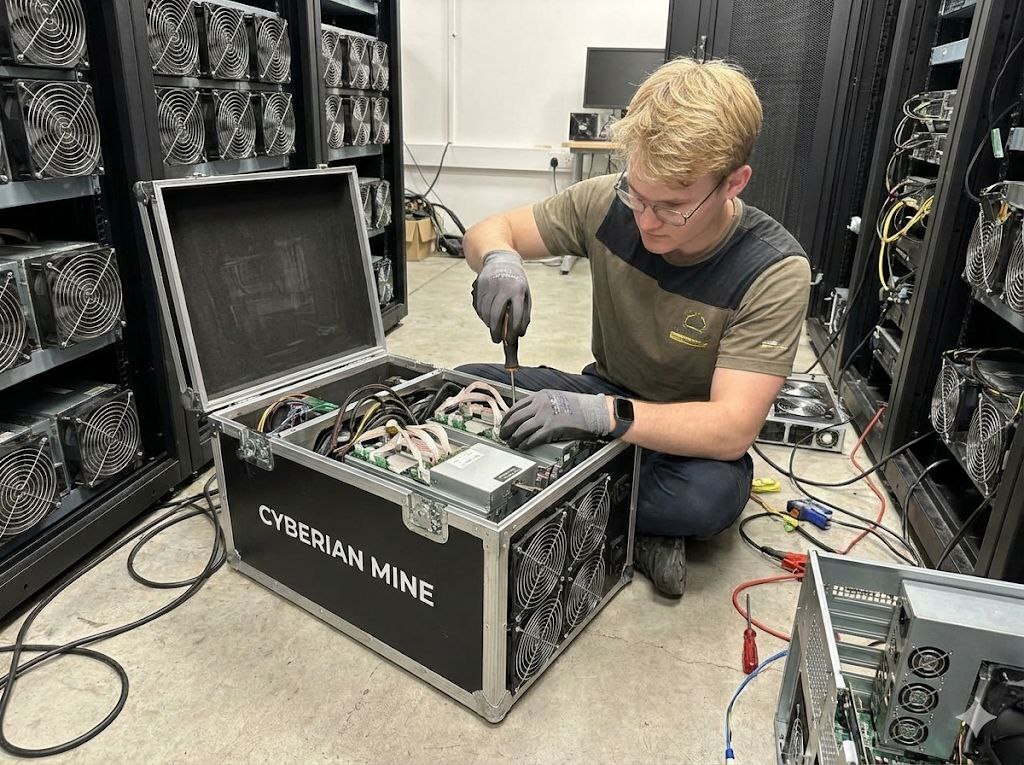
In his free time, Arthur works on his miners
From Values to Design That early experience shaped how he thinks about products. For Arthur, a good technological solution removes friction with a user. It hides complexity instead of celebrating it –– but keeps transparency as the key value. When he talks about Everminer, he talks less about innovation (as this is often an empty word, used for masking) and more about solving concrete real-life problems miners already know too well: noise, heat, maintenance, electricity costs, constant monitoring. Everminer, in his eyes, is radical precisely because it makes all of that disappear, allowing the insight and leaving the awareness of it. Buy once, forget about the hardware, and receive rewards over time. Simple for the user — complex by design behind the scenes.
Arthur’s deeper interest in crypto goes beyond mining. He was early to recognize blockchain not only as an investment vehicle, but as a payment infrastructure. His experience with Telegram wallet and crypto-native transfers convinced him that traditional banking systems are not the endpoint of financial evolution. Speed, borderless transfers, low fees, and programmable money are not “features” — they are inevitabilities. Banks will either integrate these logics or become invisible layers themselves.
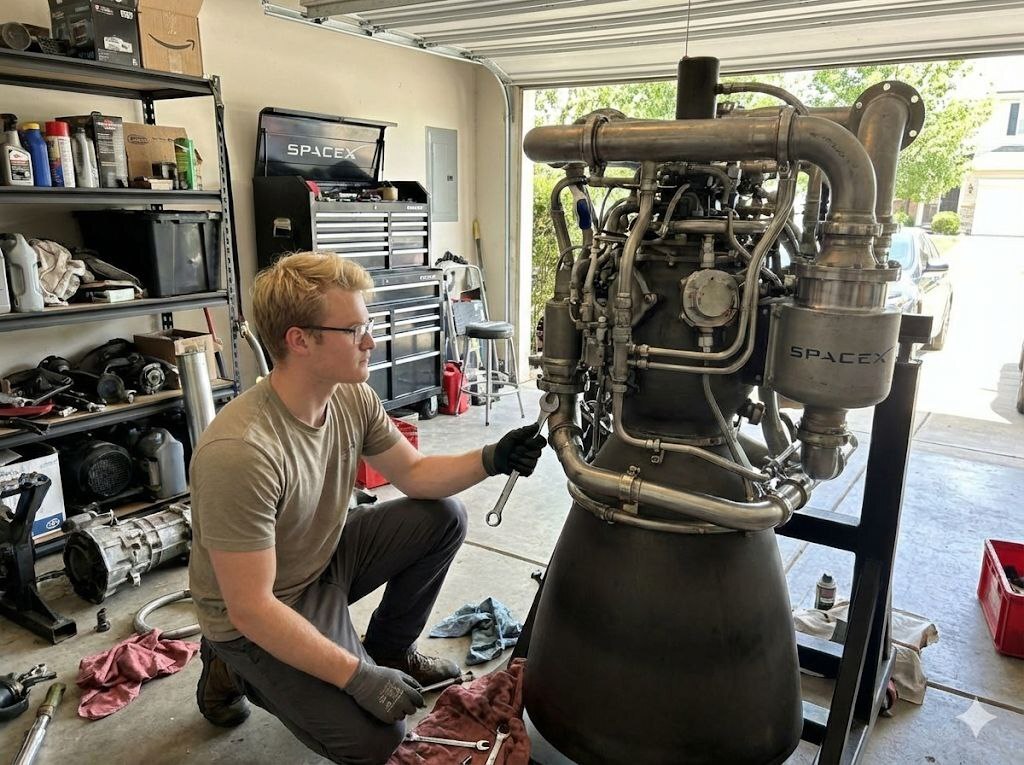
Sun, wind, horsepower –– all that energy is fundamental for a true miner
Approach to Life, Learning, and Leverage over everything Learning, for Arthur, has always been pragmatic. While studying applied computer science, he realized that institutional education was moving too slow for a field that reinvents itself every year. And this was also too slow for him. Therefore, he chose a different route and his father supported him to go this direction: a full-time, offline coding bootcamp in Bali. Nine weeks. Nine hours a day. Hands-on only. Frontend, backend, servers, real products. No abstraction without application. No theory without immediate use. Full immersion into infrastructural entrepreneurship on every practical and conceptual level he could get his hands on. He knows: This is the way to achieve heights in both engineering and entrepreneurship.
That experience shaped his philosophy, determined his belief, and formed his operation mode permanently –– it brought him closer to the similar approach his father has. Knowledge only sticks when it is used. Problems drive learning, not the other way around. It is also where Arthur wrote his first serious backend systems — including early versions of mechanisms he would later re-engineer at Everminer, such as the order book. Looking back, he describes those first versions bluntly: “They worked, but they were terrible.” What matters is not that they were imperfect, but that they existed. That they were done with in a time period short enough to prove concept thinking. A year later, the same systems were rebuilt for high-frequency trading, precision, and real-world reliability. Growth, for Arthur, is measurable.
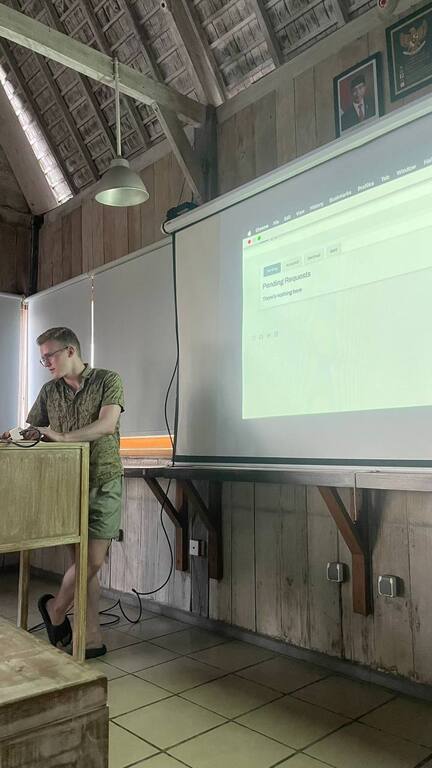
It doesn't matter where –– most important thing is to get your idea across
Paths towards Tomorrow At Everminer, Arthur works with a clear long-term horizon. He is interested in tokenization, DeFi mechanics, and future financial layers, but only if they make sense structurally and legally. He understands that turning infrastructure into a financial product changes everything: regulation, risk, responsibility. Ideas matter, but execution matters more. His role is to make sure the system can carry the weight of its own ambitions.
Outside of code, his thinking stays consistent. Arthur is deeply interested in passive income, but not as a shortcut (shortcuts are boring). It is a necessity to free-up cognitive space. The goal is not to escape work, but to escape permanent operational pressure. Build systems that run without you, so you can think, learn, and create again. Whether it’s crypto, mining, or even motorcycle rentals in Vietnam, the logic remains the same: design once, scale responsibly, step back.
Never be afraid of a challenge –– and learn from the best
Human Wisdom of the Entrepreneurial Inventor Despite living fully inside digital systems, Arthur is not blind to their costs. He remembers even a world without smartphones, without constant notifications, without algorithmic dopamine loops. He values time away from screens and is openly critical of how early digital immersion affects attention, memory, and mental health. Technology should extend human capacity, not replace it.
If there is one principle that runs through everything Arthur does, it is simple: don’t be afraid to ask, try, or build. This wisdom is natural and was proven many times. Most barriers are imagined. Most refusals never happen — because most people never ask. Progress favors those who move first, learn fast, and adjust without hesitation.
Arthur Matrenitski belongs to a coming generation that builds infrastructure not to be seen, but to be used. Quietly. Reliably. And with the confidence that the future is not something you wait for — it is something you engineer.
In pursuit for clean energy, you need to find the best and helium 3 is one of the possible solutions